|
No Longer Incomprehensible by Rolaant McKenzie |
|||
Learning to communicate with another person to convey an important message or open the door to friendly relations can be a very challenging affair, especially when interacting with someone from a different language and culture. This challenge was depicted in the Star Trek: The Next Generation episode Darmok (Season 5, Episode 2, 9/30/1991), where an alien race called "The Children of Tama" (Tamarians) sent a starship commanded by Captain Dathon to El-Adrel IV, an uninhabited planet at the edge of their territorial space. Once in orbit, a signal was transmitted toward Federation space. The USS Enterprise, commanded by Captain Jean-Luc Picard, picked up the signal and rendezvoused with the Tamarian vessel over El-Adrel IV. Picard opened communications with Dathon on the viewscreen but soon realized that they could not understand each other. Tamarians communicate by using allusions to their history and mythology, and though the Enterprise's universal translator could translate the words, without knowledge of the people, places, and things in the metaphor, the words were undecipherable. Likewise, Dathon could not understand Picard's straightforward language. Not willing to give up on establishing friendly relations with the Federation, Dathon stood up with two long-bladed daggers in his hands and said, "Darmok and Jalad at Tanagra!" Suddenly, both he and Picard were transported off their respective bridges to the planet below. The Tamarian ship projected a scattering field in the ionosphere of the planet to prevent either ship from using their transporters. Overnight, Dathon and Picard make slow progress in understanding each other. The next morning, a large beast with sharp claws and spikes attacked them. Dathon gave Picard one of his daggers, and they fought it together, inflicting some damage and causing it to retreat. But Dathon was mortally wounded. Later, Picard learns from Dathon that Darmok and Jalad were two legendary travelers who fought and defeated a common enemy on the island of Tanagra. Dathon, knowing that the beast was on the planet, brought them there to reenact this story, hoping that by facing a common enemy, his people and those of the Federation would be brought together in friendship. Picard related to him the story of Gilgamesh and Enkidu, an ancient Earth story from the Epic of Gilgamesh where two opponents became friends by defeating the Great Bull of Heaven, but at the cost of Enkidu's life. Dathon apparently understood the story but succumbed to his injuries and died. The Enterprise managed to disable the Tamarian vessel's scattering field and beam Picard to the bridge. But before a devastating conflict could ensue, he was able to communicate with the first officer of the ship, who was pleased with the turn of events, even though it cost their captain his life. Before parting ways, the first officer told Picard that this successful contact opening the door to friendship with the Federation would be added to their lexicon and be known as "Picard and Dathon at El-Adrel." When the apostle Paul came to Athens, an eminent intellectual hub of the ancient world, he was troubled by the rampant idolatry he saw. At the local synagogue he reasoned from the Scriptures to the Jews and God-fearing Gentiles that Jesus was the Messiah. He also shared the gospel message in the marketplace with whoever happened to be there. Some of the Epicurean and Stoic philosophers present heard his words but did not understand what he was saying, so they brought him to the Areopagus (Mars Hill), a gathering place where Athenians and visitors to the city would gather to discuss philosophy and new ideas they encountered. Addressing his audience, Paul referred to their religious nature, which was manifested in the many objects of worship he observed in the city, including an altar to an unknown god. He called on them to repent and believe in the Man the God of heaven has appointed to judge the world in righteousness, Jesus Christ, having proven this by raising Him from the dead. Many of those present dismissed the idea of the resurrection of the body, and they mocked Paul. But some heard the message, believed, and were reconciled to God through trusting in Jesus (Acts 17:16-34).
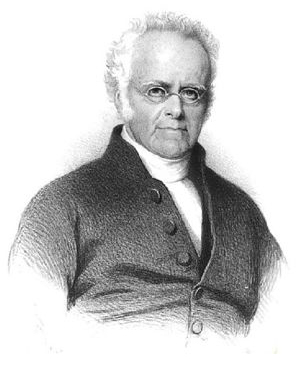
Likely inspired in part by this account, Anglican minister Henry Williams (1792-1867), under the auspices of the Church Missionary Society, left England with his family with the goal of reaching the Māori people of New Zealand for Christ. He arrived in 1823 and learned the language and culture. In doing this, Williams learned the Māori words and concepts of "Io Matua Kore" (supreme creator), "mana" (spiritual power), "tapu" (sacredness), "hara" (sin or guilt), "takawaenga" (mediator), "whakamarie" (atonement), and "kaiwhakarākau" (one who saves or delivers). Williams' efforts over time led to many Māori coming to faith in Jesus Christ, one of the results being that it eventually brought an end to rampant intertribal warfare. For the remainder of his life, Williams lived among the Māori people, ministering to them and discipling them in the Christian faith at Holy Trinity Church in Pakaraka, which continues to hold Sunday services to this day. The apostle Paul used the Scriptures with the Jews and God-fearing Gentiles, and with the pagan Greeks, he used their altar to an unknown god to explain the gospel in terms they could understand (1 Corinthians 9:19-23). Williams, following his example, did the same among the Māori people, resulting in the salvation of many. The gospel of forgiveness and reconciliation with God through faith in Jesus Christ is "the power of God for salvation to everyone who believes" (Romans 1:16). It is for you, me, and those near and far to us. While not all of us are called to be missionaries to other countries as were Paul and Henry Williams, we can support those who share this message abroad (Matthew 28:19-20; Acts 1:8; Romans 10:14-15). However, for those of us whom God has graciously granted the gift of forgiveness and eternal life through trusting solely in the Lord Jesus Christ, His life, death, and resurrection (John 3:16-18; 1 Corinthians 15:1-4), wherever God has placed us in the world, we can seek His help to understand the background and perspective of a family member, a neighbor, a friend, an acquaintance, a coworker, or someone met while shopping, and use it to make the gospel no longer incomprehensible, gently and respectfully giving an account for the hope that is in you (1 Peter 3:15), leading to their salvation and becoming with us a part of the family of God. |
|||
 |
|||
| What Is the Gospel? | What Must I Do to Be Saved? | Home | Contact Us | Return | |||